
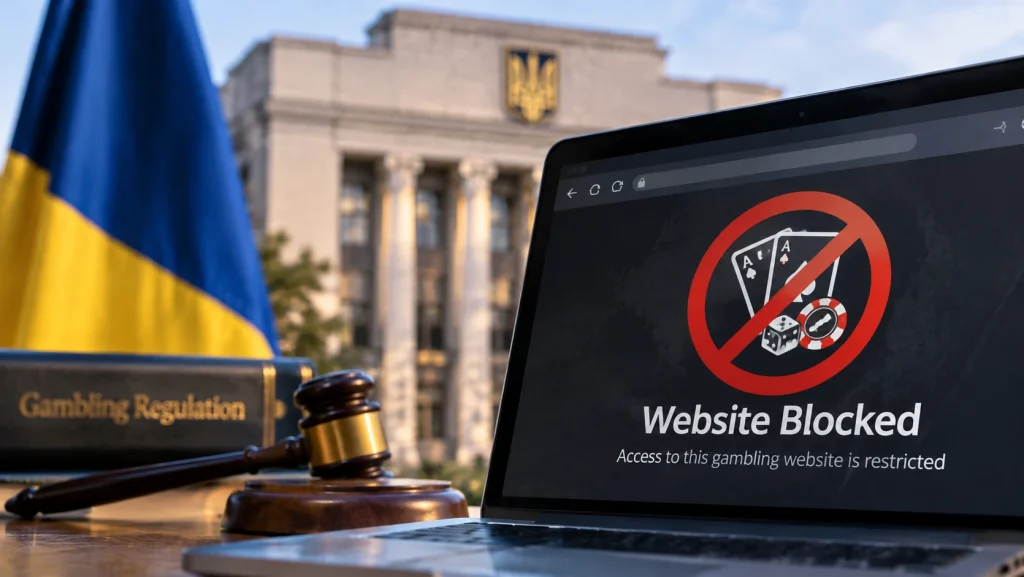
Ukraine has instructed internet service providers to restrict access to 372 gambling websites identified as operating without a local licence. The order was issued on 2 November and appeared in industry coverage on 7 November, adding to the country’s continuing efforts to limit the reach of unauthorised online gambling services.
Website blocking is one of the enforcement tools available to regulators seeking to prevent unlicensed operators from targeting consumers in a market where gambling activity is subject to local authorisation. By directing internet providers to restrict access to named domains, authorities can make it more difficult for users to reach those services through ordinary connections. The measure can also signal to licensed operators and affiliates that regulators are continuing to monitor the market.
However, domain blocking is not a complete solution on its own. Unlicensed operators may attempt to move to alternative web addresses, create mirror sites or use other distribution channels to maintain access to customers. Effective enforcement therefore often requires continued monitoring, updated blocking lists and coordination between regulators, internet providers, payment companies and other relevant parties.
For licensed businesses, action against unauthorised competitors can help support a more orderly regulated market. It does not remove the need for operators to maintain their own compliance controls, including checks on marketing, affiliate traffic, customer location and the markets in which their products are made available. Companies should also ensure that promotional material does not direct users towards services that lack the required authorisation.
The reported order covering 372 websites illustrates the scale of the challenge facing regulators in controlling online gambling across a large digital environment. The number of domains affected is a measure of the enforcement action, not necessarily the number of separate companies behind them. The longer-term effectiveness of the measure will depend on how quickly new domains are identified and whether blocking is supported by wider action against the commercial infrastructure used by unlicensed operators.