
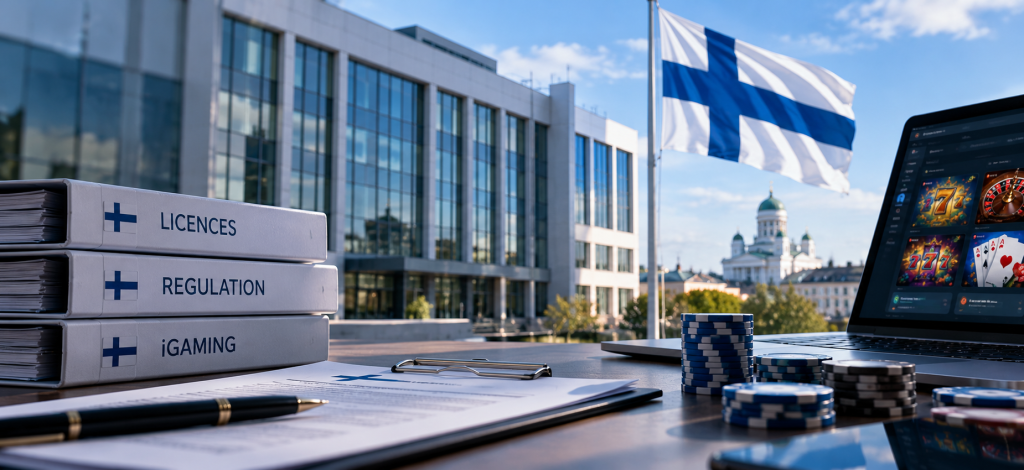
Finland has approved its first 18 gambling licence applications, marking a significant milestone in preparations for the country’s transition towards a competitive online gambling market in July 2027.
Finland’s gambling market reform is gathering pace after the National Police Board confirmed on October 29 that 18 companies had received licences under the country’s new Gambling Act. A further 63 applications remain under review, bringing the total number of applications to 81.
The announcement represents a notable change from earlier stages of the licensing process, when operators were preparing applications but approvals had yet to be issued. The first licences provide a clearer indication of which companies are progressing towards the new regulatory environment and how the competitive landscape could begin to take shape.
The licences are scheduled to run from July 1, 2027, until June 30, 2032, unless otherwise specified. The new framework is intended to open selected online gambling segments to licensed competition while maintaining regulatory oversight.
Established Operators and New Entrants Prepare for Launch
The list of approved companies includes Skill On Net Ltd, Hippos ATG Oy, Sunflower Gaming Limited, Granturo Finland Ltd and SuomiVeto Oy, alongside several other licence holders.
Some of the companies are connected to established gambling businesses, while others represent new market entrants or ventures created specifically for the Finnish opportunity.
Hippos ATG, for example, is a joint venture involving Swedish operator ATG and Finland’s trotting association Suomen Hippos. SuomiVeto was established by the founders of Dutch betting operator BetCity.
The approvals suggest that companies are moving beyond market research and beginning the practical process of preparing for regulated operations.
However, the number of licences should not be confused with the number of independent brands that will eventually compete. The published list identifies legal entities, and several companies may belong to the same corporate group.
This distinction will matter when assessing the eventual level of competition and the number of operators that are likely to launch consumer-facing products.
Why Finland Matters to the iGaming Industry
Finland has traditionally operated a state-controlled gambling model, with Veikkaus holding exclusive rights across major gambling categories.
The new framework will introduce competition in selected online segments, including eligible casino games and sports betting, while Veikkaus is expected to retain exclusive rights over certain other products.
For international operators, the change creates an opportunity to enter a market through a formal licensing system rather than relying on uncertain arrangements.
Yet obtaining a licence is only the beginning. Companies will need to prepare their platforms, establish local compliance procedures, meet technical requirements and ensure that their marketing and customer management practices comply with Finnish law.
Operators will also need to consider how they intend to differentiate themselves once competing brands become available to the same audience.
Brand recognition may help attract attention at launch, but long-term performance will depend on factors such as product quality, payment reliability, customer support and responsible gambling safeguards.
63 Applications Remain Under Review
The National Police Board has indicated that applications take approximately six to eight months to process. With 63 submissions still awaiting decisions, the approved list could change considerably before the market opens.
The remaining applications will be important in determining the eventual competitive structure. They may also indicate whether the market is likely to be dominated by a relatively small number of established groups or include a wider range of operators.
Companies awaiting approval must continue preparing for launch without certainty about the final timing of their licensing decisions.
The regulator, meanwhile, faces the challenge of processing applications while ensuring that suitability and compliance assessments are not compromised by commercial pressure to meet the launch date.
What Happens Next?
The next stage will involve further licensing decisions and preparations for the operational launch scheduled for July 2027.
Operators will need to translate regulatory approval into functioning products, while regulators will need to ensure that the opening market meets its intended standards for consumer protection and responsible gambling.
For the wider European iGaming sector, Finland is an important market to watch. The reform illustrates how a country can introduce competition while retaining a defined regulatory structure.
The first 18 approvals are an important step, but the real test will come when the market opens and licensed operators begin competing for customers.