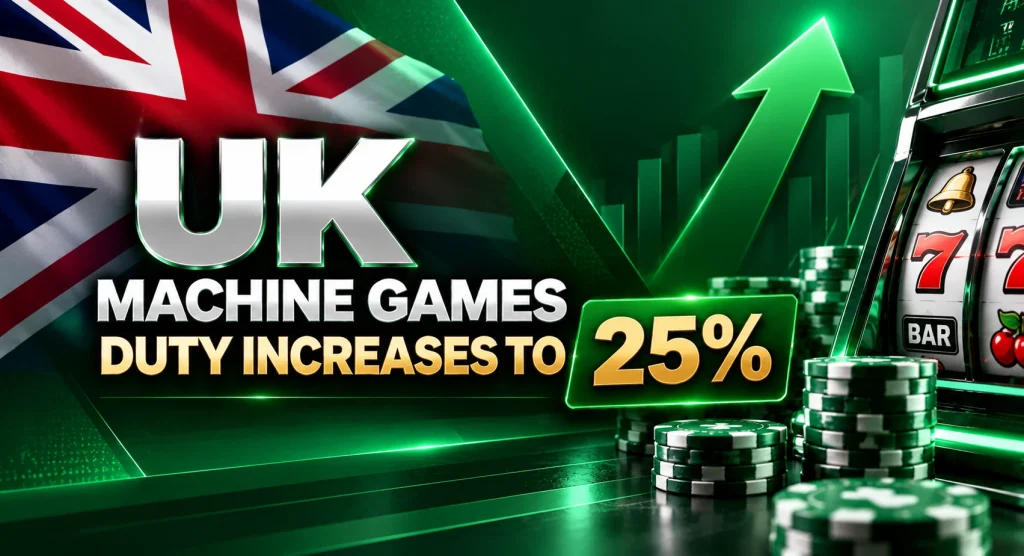
The UK government has announced an increase in Machine Games Duty (MGD) from 20% to 25% for higher-stake gaming machines, with the new rate scheduled to take effect on 1 April 2027. The decision has triggered fresh concerns over operating costs, betting shop closures and employment across the land-based gambling sector.
The UK gambling industry is facing another tax increase after Chancellor John Healey announced changes to Machine Games Duty as part of the government’s 2026 Budget.
Under the new rules, the tax rate will rise from 20% to 25% for gaming machines with a maximum charge to play of more than £1 or a maximum cash prize exceeding £100.
The measure will apply from 1 April 2027 and is expected to affect businesses operating gaming machines in betting shops, adult gaming centres, bingo premises and casinos.
The government estimates that the change will generate additional tax revenue of approximately £135 million in 2027/28, followed by around £130 million annually in subsequent financial years.
Which Gaming Machines Will Be Affected?
The increase specifically targets machines classified within the higher-rate category of Machine Games Duty.
Under the revised thresholds, machines with a maximum stake of more than £1 or a maximum prize above £100 will be subject to the 25% rate, rather than the previous 20%.
Lower-stake gaming machines will retain their existing tax treatment, including the 5% rate applicable to qualifying low-stake machines.
The government says the policy is intended to ensure that machines associated with higher levels of gambling harm contribute more through taxation.
Importantly, MGD is paid by businesses providing taxable machine games rather than directly by individual players. However, the government acknowledges that operators could respond through changes to machine availability, game economics or customer returns.
Industry Warns of Betting Shop and Casino Closures
The announcement has prompted criticism from several gambling industry representatives, who argue that the additional tax burden could put further pressure on already challenged retail businesses.
The Betting and Gaming Council (BGC) warned that the increase could place almost 9,000 jobs at risk and leave nearly 1,000 betting shops and casinos facing closure or serious financial difficulties.
These figures are based on analysis commissioned by the industry body from EY and represent projected risks rather than confirmed job losses or closures.
The BGC also pointed to the cumulative impact of previous gambling tax changes, arguing that operators have already been forced to reassess their retail estates, staffing levels and investment plans.
The British Horseracing Authority also expressed concern, warning that the tax increase could affect betting shops and, indirectly, the financial relationship between retail bookmakers and British racing.
The organisation estimated that British racing could potentially lose £57 million annually if the wider consequences predicted by its modelling materialise.
Entain Estimates Additional Annual Cost of £25 Million
Major operators are already assessing the financial implications of the Budget announcement.
Entain, which operates Ladbrokes and Coral in the UK retail market, estimated that the increase in Machine Games Duty could add approximately £25 million in annual costs to its UK and Ireland retail business before mitigation measures.
The company said it would look to offset the impact through estate optimisation, operational efficiencies and potential market share gains.
Entain also stated that its existing financial guidance remained unchanged following the announcement.
The group’s response illustrates how even a five-percentage-point increase can have a meaningful effect on operators with substantial retail gaming machine exposure.
A Wider Tax Challenge for UK Gambling
The MGD increase comes alongside other significant changes to the UK’s gambling tax framework.
Remote Gaming Duty increased from 21% to 40% on 1 April 2026, while General Betting Duty on remote betting is scheduled to rise from 15% to 25% on 1 April 2027.
Together, these changes are increasing the tax burden on different parts of the gambling industry, affecting both online operators and land-based businesses.
The government has also opened a separate consultation on changing who is responsible for paying Machine Games Duty under certain commercial arrangements.
Under the proposed liability reform, responsibility would move to suppliers for supplier-owned machines operated under profit-sharing agreements. The consultation runs until 20 January 2027, with implementation of the liability changes planned for 1 April 2028.
What the Increase Means for Operators
For betting shops, casinos and gaming machine providers, the new MGD rate creates another financial consideration when evaluating the profitability of individual venues and machines.
Operators may need to reassess machine portfolios, commercial agreements and investment decisions ahead of the April 2027 implementation date.
Suppliers could also face changes to their contractual arrangements, particularly where they own machines and share revenue with premises operators.
The debate is likely to continue as the government finalises the wider tax framework and considers responses to its consultation.
For the UK gambling industry, the key question is whether the additional tax revenue can be achieved without accelerating pressure on retail venues, employment and the wider businesses connected to the sector.